

TV anime productions are often severely limited, so how do you rise from that to make something not simply good but genuinely extraordinary? Gimai Seikatsu and rookie director Souta Ueno found their answer: abstraction, eclectic storytelling, and avant-garde influences to twist genre tropes.
On this site, we tend to talk about anime with relatively high production values. Mind you, this isn’t due to any particular fondness for larger, more expensive projects than the norm. If anything, we regularly find ourselves singing the praises for teams who consistently punch above their weight; something achievable through resourcefulness from both creators and management teams, as is the case for this season’s Makeine and their beloved production line. Even with that mentality, though, there’s a certain threshold for production values that feels required for modern titles to register as successful creative endeavors.
Anime has historically fostered efficient forms of expression, ways to move the audience despite the cheap, rushed nature of most productions. With time, their solutions can be refined to a point where it feels like their technique doesn’t excel in spite of those circumstances, but rather because of them; in truth, looking for shortcuts is never that noble a pursuit as most people would rather not have to deal with restrictions in the first place, but that doesn’t make the evolution of those solutions any less interesting. When people point out these tendencies, they rightfully mention aspects like Japan’s grasp of framerate modulation, or specific directorial schools with theatrical staging that minimizes the need for movement.
From a different angle, I’d argue that the same phenomenon still occurs nowadays. The heavy lifting by compositing departments to give visual coherence where there isn’t and flashy finishing to less graceful drawings, or even some fan-favorite types of action animation, are mechanisms to provide something tangible the audience can enjoy even when there isn’t a solid foundation under it. And in the right hands, those tricks can (but not necessarily will) become just as compelling of an experience as anything conceived in more traditional fashion. Again, the patchwork and corner-cutting is able to evolve into something that is well worth appreciating in its own right.
What happens to less fortunate efforts that can’t afford either the careful groundwork or the attractive shortcuts, then? It’s not a lack of bombastic animation or superficial polish that stands to become a problem for those. Visual sheen can be a pleasant cherry on top, but it’s effectively worthless if it rests on a noticeably half-baked cake. Rather than in those areas, the real danger for smaller, cheaper projects is to have to compromise so much on the delivery—or unwillingly execute it so poorly on a technical level—that the interesting ideas they may have had simply don’t reach the audience. And if they do, they may do so in such a rough state that they leave a bitter aftertaste.
Is it possible for a title with very low to abysmal production values to be genuinely excellent, a fulfilling experience you wouldn’t bother to bring up the shortcomings of? The answer is obviously yes, but let’s get into it some more.
Commercial works can hardly ever escape the specter of storytelling. Though that iron rule has its downsides, mostly in narrowing the audience’s understanding of what animation (and art altogether) is capable of, there’s an obvious upside: a compelling enough narrative can always make you feel like a somewhat shoddily executed work is still worth your time, maybe even deserving of a special place within your heart. It’s no magical spell that makes even a good story impervious to other factors—animation can be so poor it’s actively distracting, and flat direction can deflate the most rewarding developments within a story. It is, however, a way to tip the subjective scales of what makes for a compelling experience despite clear flaws.
When combined with those traditional means of efficiency in the delivery, a solid story has a better chance to resonate despite an uphill battle against the limitations of its production. It’s no coincidence that many of anime’s greatest directors hail from long-running works, with rather strict allocations of resources and where outrageous expenditures have often been looked down upon internally; which is to say, environments where you better be a resourceful director if you don’t want to earn the ire of your workplace. Of course, these approaches also require proficiency in their own ways. If you attempt to make up for a severe lack of animation firepower through striking staging, you’ll need exceptional storyboarders, at the very least a solid backbone when it comes to the layoutsLayouts (レイアウト): The drawings where animation is actually born; they expand the usually simple visual ideas from the storyboard into the actual skeleton of animation, detailing both the work of the key animator and the background artists., and likely the aid of inspired color design or art direction to sell the stationary framing.
By actively matching the themes of the work with those economical directorial choices, it’s possible for an industry as chronically limited as anime has been to consistently put out pleasant little works. One such case could be this season’s Tasogare Outfocus. Its adaptation at studio DEEN has stiff animation, and could hardly be heralded as the definitive take on its charming source material. It is, however, one that so far has stood on its own as a perfectly reasonable way to experience this story, with its own upside.
In taking the theatrical stylizations of the original work—it’s a love story between two guys around the film club after all—and building upon them, series directorSeries Director: (監督, kantoku): The person in charge of the entire production, both as a creative decision-maker and final supervisor. They outrank the rest of the staff and ultimately have the last word. Series with different levels of directors do exist however – Chief Director, Assistant Director, Series Episode Director, all sorts of non-standard roles. The hierarchy in those instances is a case by case scenario. Toshinori Watanabe has given a distinct enough flavor to the anime. It’s one that combines his own tendencies, like the reliance on paneling, with occasional visual explorations of that core theme; for example, by shifting to a cinematic aspect ratio for their moments of physical intimacy over the movie they record, as if to say that is the true cinema. By storyboarding every single second of footage so far and directly processing most of it, Watanabe has kept those nuggets of greatness consistent, elevating an unassuming production that would have fallen flat on its face without those inspired choices.
To be frank, I don’t find such cases to be particularly rare. Given just how much anime is made, and how invested a lot of people in the industry are in spite of everything, it’s no surprise that plenty of compelling TV shows rise above their subpar production values. However, what if someone set out to make something that isn’t merely good but truly exceptional, while being shackled with perhaps rougher edges than this norm? If art had numerical stats allocation, you might think of counteracting that by simply telling a unique story with such arresting framing that demonstrable production issues barely even register. Now that’s not how art works at all, and you can’t realistically expect such an unevenly conceived work to happen on the regular, but I’d be lying if I said that it’s not possible to stumble into a position like that. It could even happen within a genre full of trite works, content playing off tropes. And it’s indeed happening in Gimai Seikatsu, also known as Days with My Stepsister.
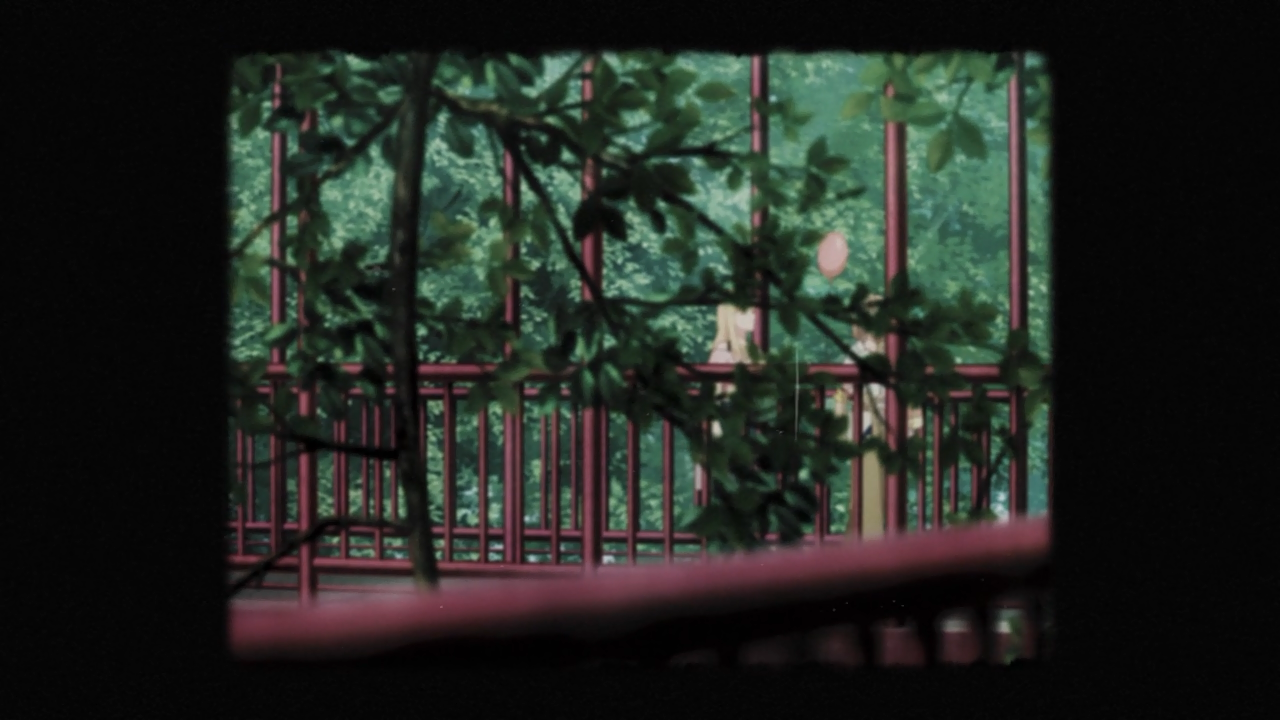
Original author Mikawa Ghost has extensive experience writing works for core otaku, spanning as many roles as formats he’s been involved with. This is to say that he has no bone to pick with well-established tropes, so it’s not out of spite that he set out to challenge them with Gimai Seikatsu; if anything, it feels like a sociologist toying with familiar scenarios. We don’t have to look far to find an explanation of its goals: in his own Twitter account, the author has been providing weekly commentary of the fascinating adaptation it’s now getting. Calling it extensive is an understatement, since it’ll effectively add up to book-length by the end of the broadcast.
One recurring aspect in those comments is the contrast between his intent and that of the director, both what he perceives and the insider information he’s privy to—and so, given how often that topic comes up and the already massive length of his commentary, he has started summarizing Gimai Seikatsu’s overall goal in increasingly more compact ways. Mikawa has settled on a definition along the lines of “Gimai Seikatsu depicts the fantastical romcom scenario of living with a new stepsister, but then proceeds to play out as realistically as possible, treating those people as if they truly existed”, which doesn’t convey the full nuance of the story but is a solid starting point. To be precise, I think it’s worth noting that the characters are bound by their own reality rather than a completely lifelike one. Gimai Seikatsu is indeed very grounded, but also somewhat off-kilter, in a way that adds to its appeal.
Rather than simply its intent to recontextualize familiar scenarios, then, the peculiar texture and tone of the series are also fundamental points in its identity. Maintaining those less tangible aspects across different iterations and formats can be tricky, hence why Gimai Seikatsu’s overly conventional rendition of the same events feels like it misses the point, but you can also deliberately twist them to make a point. Part of Mikawa’s experiment was to launch the series through a YouTube channel still maintained to this day, which plays out like a regular influencer effort except with anime romcom flavor; amusingly, the idea of launching something like this is pitched within the series itself as a get-rich-quick scheme and is quickly rejected. While its existence embodies the unique nature of the series, the inherently performative style and uneven writing (as it’s handled by different people) make it cute at points but not particularly interesting on its own; the fact that they constantly clickbait by pretending the contents will be more scandalous than they are is an objectively funny bit, though.
It’s through Mikawa’s own novelization that you can begin appreciating Gimai Seikatsu’s true appeal. In strictly binding the characters to reality, he restrained not just its narrative but the entire worldview. That might sound ominous, but simply means that it has a writing principle often verbalized in the afterwords: real people don’t need bombastic events to experience emotional shifts, and falling in love can occur in the most arbitrary, mundane situations. With that in mind, the novels tend to span really short periods, with chapters framed from a specific character’s POV and lasting for a single day. The events they cover are ordinary, casually taking a small step in their relationship each time.
This understated nature is amplified by the fact that those stories are firsthand accounts by two characters with fairly dry personalities of their own; both Yuta Asamura and Saki Ayase carry deep wounds from their parents’ failed previous relationships, and while they’re happy about a remarriage that is clearly brightening the family’s daily life, their emotional distance with the world at large still remains. Gimai Seikatsu isn’t particularly sad, but it turns a usually bright and loud genre into something much more restrained and muted.

Again, translating those intangibles into other formats is no easy task. Anime adaptations are a particularly tricky challenge, as sometimes there isn’t even a desire to—especially when they lead to unconventional flavors. Simply by being orders of magnitude more expensive than printing a novel, something true of even cheap productions, anime projects are often held back by producers who demand safer, more marketable products to recoup costs. Even adaptations of already eccentric works tend to have their edges smoothed out in this way, erasing their original charm in the process.
And it’s not just those cynical factors: the restrictions inherent to the format itself aren’t easy to navigate. The stiff structure of TV programming is still the norm even in the age of streaming, so creative teams better be ready to chop stories in 13x24m chunks even if that doesn’t naturally fit. This is especially tricky for a series with a deliberately slow pace like Gimai Seikatsu; growth is gradual and slow, meaning you’d like to pack quite a few novels into a single cours, but at the same time that rhythm is so integral to its charm that rushing through the series would make everything collapse.
To pull off this stunt, a Gimai Seikatsu adaptation would have to nail its unique vibe for starters, maintain enough of the characters’ ramblings about society to get across their worldviews, but also abstract many scenes so that they’re able to move at a brisker pace without negatively impacting that contemplative mood. That’s not something you should wish upon a newcomer, but maybe we should be glad that they did, because rookie series directorSeries Director: (監督, kantoku): The person in charge of the entire production, both as a creative decision-maker and final supervisor. They outrank the rest of the staff and ultimately have the last word. Series with different levels of directors do exist however – Chief Director, Assistant Director, Series Episode Director, all sorts of non-standard roles. The hierarchy in those instances is a case by case scenario. Souta Ueno is knocking it out of the park.
Ueno became a production assistantProduction Assistant (制作進行, Seisaku Shinkou): Effectively the lowest ranking ‘producer’ role, and yet an essential cog in the system. They check and carry around the materials, and contact the dozens upon dozens of artists required to get an episode finished. Usually handling multiple episodes of the shows they’re involved with. at studio DEEN over a decade ago, where he just so happened to immediately work under directors as fascinating as Mamoru Hatakeyama, and for eccentric projects ala Meganebu!. His directorial ascent brought him to freelancing, though he still works with his original company more often than not—hence why his first project as series directorSeries Director: (監督, kantoku): The person in charge of the entire production, both as a creative decision-maker and final supervisor. They outrank the rest of the staff and ultimately have the last word. Series with different levels of directors do exist however – Chief Director, Assistant Director, Series Episode Director, all sorts of non-standard roles. The hierarchy in those instances is a case by case scenario. landing there is no surprise. Across his short career as a storyboarder and episode director, you can in retrospect appreciate aspects that are now part of the fascinating style on display in Gimai Seikatsu; a fondness of using incidental details to convey the specific weather and thus the feeling of the moment, the depth of his shots in Cells at Work! S2, or his framing of domestic reality in Kami-sama ni Natta Hi.
It’s important to note, however, that they were mostly isolated instants of excellence in otherwise very competent but not particularly eye-catching episodes. To find something closer to the exceptional work he’s leading now, you’d have to look at the Collar x Malice film he co-storyboarded and did part unit direction for; the elegant way to capture a traumatic experience right at the start should feel very familiar to Gimai Seikatsu viewers. Though it’s natural that Ueno has simply improved with time, it appears that his latest leap has a lot to do with production hierarchies. We often remind people that, even for episode directors who already stand out as superstars, the responsibility to lead their first project can be heavy—to the point of often causing them to dilute their style. In some cases, that same attractive approach never ends up translating to the series direction role, because it simply requires a different skill set.
In Ueno’s case, you could argue that the opposite phenomenon is taking place. Gimai Seikatsu’s imagery is very inspired, as are many choices of its adaptation on a construction level. Its greatest strength, though, is how all of those are geared towards one specific philosophy that is palpable at any point. Even if this is ultimately Ueno’s interpretation of Mikawa’s work, it allows him to present an overarching vision that simply cannot be exposed as an episode director, where you’re always within someone else’s regime. There’s no doubt that this new challenge is still a struggle for him—he said as much to the author, who happily stated that if he found this to be a tricky work, that was great news because it means the director actually understands it. But even with that inherently uphill battle, a steeper climb given the limited resources of the project, Ueno is proving to be the perfect person to lead this intriguing series.

The first episode of Ueno’s Gimai Seikatsu establishes its identity right off the bat. The introduction is quiet, monochrome, gradually showing Ayase as she faces a realistic city. Eventually, she says that a new stepsibling is effectively a stranger. Those words are echoed by Asamura—right after he’s covered by a truck advertising a standard imouto romcom series, which drives away with its sparkles of color and returns the series to its muted state. A silent montage follows that, one of the many moments where this adaptation allows the incidental moments of mundanity to do the talking.
Though that is as clear of a stance as you can take on your genre and in regards desired tone, the less blatant moments aren’t any less attentive. No one is going to turn to the camera to say that Asamura and his father’s domestic life hadn’t been the tidiest, but as they naturally talk about the upcoming changes in their household, Ueno’s boards make sure to show that they were relying on premade meals even for breakfast. By establishing that, you can feel the routines change after the cohabitation starts—something that doesn’t just involve the arrival of people with a better handle on domestic chores, but also a change in attitude by the two of them to become a welcoming household. In this cute, awkward transition, the entire house gains new life; corners that were once empty now feature a warmer family of four. After years marked by loneliness they’d become numb to, characters come to treasure details like returning to a house where lights will greet them.
To capture this shifting daily life, Ueno’s framing is quite particular. In the first episode alone, the same distant hallway shots are used by the dozen, giving us glimpses of different moments in time for a household that is gradually changing. This is reminiscent of Mamoru Hosoda’s fondness for casually voyeuristic doupoji shots, repeating layoutsLayouts (レイアウト): The drawings where animation is actually born; they expand the usually simple visual ideas from the storyboard into the actual skeleton of animation, detailing both the work of the key animator and the background artists. that show the interior of people’s homes to build an understanding of their daily routines. Dry Japanese cinema, with an understated tone and a lot of pillow shots, resonates strongly throughout Ueno’s adaptation—but so do more international sources of inspiration. The director pointed at the work of the late Jonas Mekas, a foundational figure of avant-garde cinema whose work is dedicated to the beauty of the arbitrary and mundane.
That already overlaps with this series’ beliefs on a thematic level, and at points, it does so narratively as well. One of Mekas’ fields of expertise was his diary films, and it’s precisely through a peek at Ayase’s personal diary that we get a taste of her reality in Ueno’s episode #03. After framing everything from Asamura’s POV up till that point, deliberately leaving many aspects he doesn’t understand vague, glimpses of the other side of the coin are strikingly presented through disconnected moments of mundanity, just as Mekas showed the world. This memorable experience also rewards attention: it makes it clear, for example, that Ayase was distractedly staring at a butterfly (the same one seen for a brief moment in Asamura’s field of vision) when she nearly got in an accident, which adds to the fortuitous, casual nature of this story.
By themselves, the Gimai Seikatsu novels were already an eclectic mix of influences; spinning off a cheery, idealistic otaku subgenre, but also grounded in their own sense of realism. It’s only appropriate, then, that the anime adaptation also embraces its many sides, even if they seem at odds with each other. This unique style has quietly started making waves within the anime industry, with the likes of Shunsuke Okubo listing it among this season’s most intricately directed shows, and animation superstar Kai Ikarashi plainly saying that it’s really damn good. The critical assessment of director Mitsuharu Yoshida is especially interesting here: for one, because he always complements his technical commentary of storyboards with drawings to convey what he means, but also because he specifically shouts out that eclectic mix as being key to Gimei Seikatsu’s appeal. Incidentally, if our previous article wasn’t enough, you can check out his impressions on Eupho S3 and how its layoutsLayouts (レイアウト): The drawings where animation is actually born; they expand the usually simple visual ideas from the storyboard into the actual skeleton of animation, detailing both the work of the key animator and the background artists. that closely depict how we perceive the world are the type that normally you couldn’t get away with, as they demand tremendous draftsmanship to work.
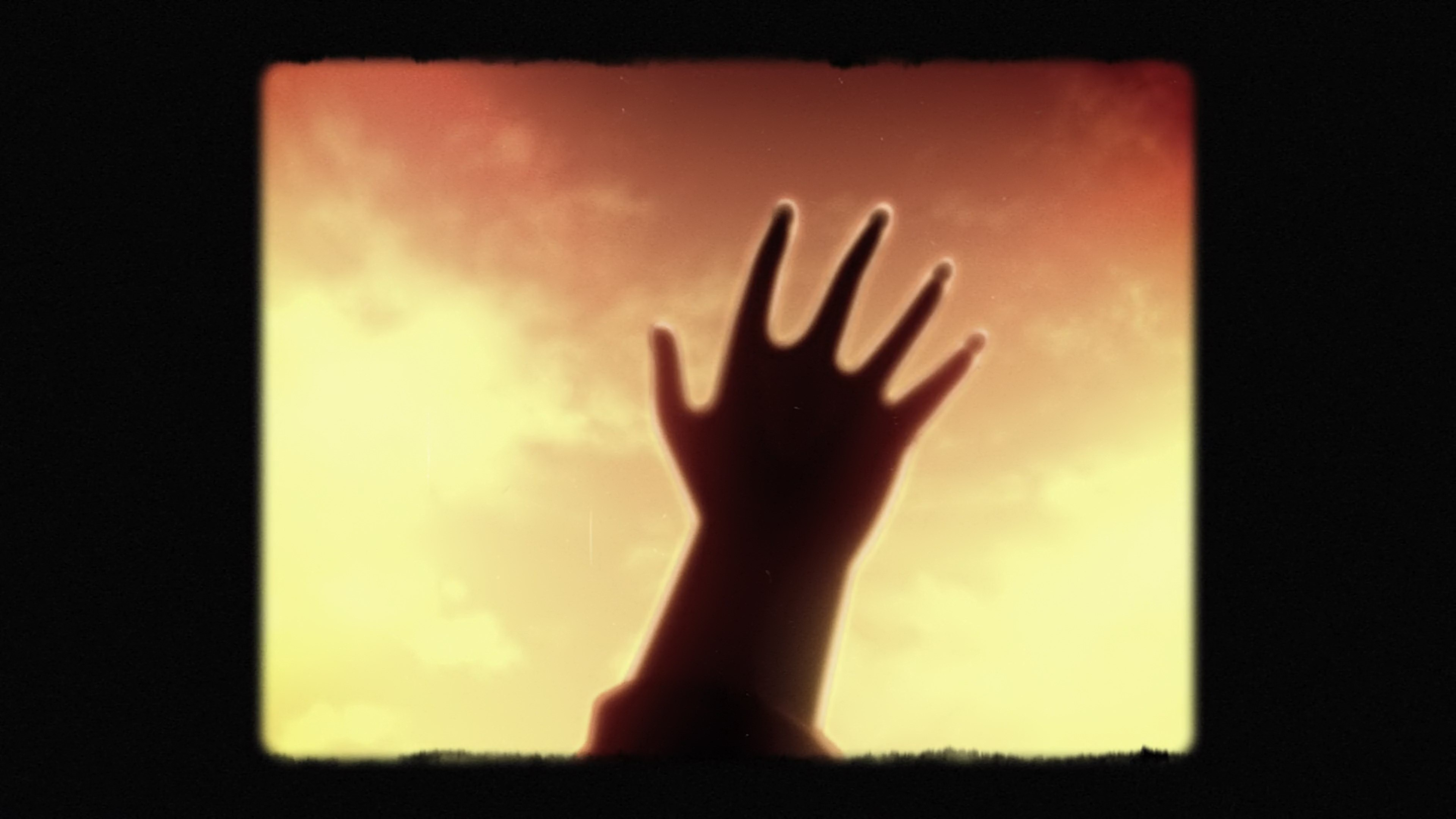
In the end, the Gimai Seikatsu anime isn’t fascinating just because it effectively draws from arthouse films, nor because it’s a cute awkward romance, but because the mix of those disparate ingredients is filtered through a young director’s style and it results in something entirely new. As Yoshida notes, the camera placement in the series tends to be comparatively low, which accentuates the casual feeling of that everyday framing—it’s as if someone had dropped a camera on the floor and it simply kept recording. This makes for very naturalistic storytelling, matching the dispassionate character of both of its protagonists as well. And yet, despite this being the dominant feel of the work, the adaptation makes the choice to maintain some of the brighter aspects of the fantasy that regular romcoms offer, whenever it wants to highlight the nature of the main characters through contrast.
A clear example of that is Ayase’s best friend, the type of almighty social butterfly you’d struggle to find outside of fiction. Her first appearance is artfully abridged in this adaptation, as a burst of her energy would have destabilized the quiet mood of Asamura’s world. On the other hand, episode #04 dedicates an entire scene to her trope-y playfulness, as in that moment he’s looking for fresh sources of inspiration to help Ayase in her quest to study efficiently. This combination of grounded direction—down to the sound, one of the aspects that have stood out to the author the most—with the very farcical dialogue and behavior you’d usually find in romcom titles creates a flavor you won’t find elsewhere.
When it comes to aspects that make this series unique, Mikawa’s writing deserves another shout-out. As previously mentioned, its lead characters were deeply affected by incidents in their families that led to divorce. Each in their own way, they’ve internalized behaviors that allow them to avoid conflict as much as possible; not by being completely asocial, but by maintaining a distance and figuring out ways to deflate issues. By being a woman, though, Ayase has to face specific issues. Her mother is very attractive but never got a chance to receive advanced education, which meant that Ayase had to watch prejudices levered against her single parent which left deep scars. Consequently, she holds nothing but contempt for the societal, gendered norms that she rants against at length in the second and third episodes. While her views are nothing revolutionary, the series’ commitment to the worldview that someone with that background would likely develop is commendable… and it adds to Gimai Seikatsu’s weird appeal, since you get to transition from a weird joke about underwear to her dissertation about society ingraining gendered prejudice even on those who hate it.
And yet, these speeches about societal ills coexist with so many moments of silence, of scenes where the show feels confident in allowing the viewer to figure out what is being conveyed—or if anything specific needs to be conveyed at all. Ayase’s brief smile at the thermostat in the first episode might not have even registered for many viewers, let alone made sense, and it’s not until the third episode that it’s revealed that she was happy Asamura is mindful enough to prepare fresh water for her. When that introductory episode ends on a lengthy silent post-credits scene of its recurring hallway, nothing is ever explained, because the show believes you’ll understand that her fumbles with the light switches are meant to embody that awkward period where you’re not used to a new home.
Even Mikawa himself is partaking in this: in his third episode commentary, he mentioned that not only there’s a specific meaning to Ayase keeping a fish, but even that its specific species adds nuance to that—and yet he refused to reveal the answer, arguing that since those were ideas the director came up with, it’s up to him to unveil them if he pleases. Many of these expressions are original to the anime, but feel like such natural extensions of the source material that the author refers to them as something that was already part of its world, implied by his writing.
If we return to the original topic of conversation while examining this fascinating adaptation, it’s easy to notice how many of these choices allow it to get away with its limited means. Smart construction and those interesting sensibilities solve the issues of limited screentime; a lengthy conversation about the usefulness of Lo-fi Beats To Study To channels was distilled by episode #04 into a moody montage of such sounds over a rainy day, making it both faster and more sensorially appealing. That casual, still camerawork with a plethora of long shots reduces the number of assets needed, and somewhat camouflages the shoddy drawings. Of course, this doesn’t mean that the show is better for those limitations—Ueno has simply proved that he’s capable of creating something exceptional even when shackled by those. Though it’s certainly true that he was lucky that he was entrusted with interesting material for his debut, as well as with an environment that didn’t attempt to restrict the broad vision he so clearly has, it also makes you wish for the best of both worlds. Sure, it’s cool when an up-and-coming director rises above less-than-ideal conditions, but it might be even better if he was in a situation where those aspects further elevate him rather than attempt to hold him back. To any producers reading this, you know what to do.

Support us on Patreon to help us reach our new goal to sustain the animation archive at Sakugabooru, SakugaSakuga (作画): Technically drawing pictures but more specifically animation. Western fans have long since appropriated the word to refer to instances of particularly good animation, in the same way that a subset of Japanese fans do. Pretty integral to our sites’ brand. Video on Youtube, as well as this SakugaSakuga (作画): Technically drawing pictures but more specifically animation. Western fans have long since appropriated the word to refer to instances of particularly good animation, in the same way that a subset of Japanese fans do. Pretty integral to our sites’ brand. Blog. Thanks to everyone who’s helped out so far!
Become a Patron!

